
When buyers explore sewing machines, one common question arises: “How do I choose between manual, electric or computerized machines?” The answer lies in understanding how each type functions, what features they carry, and how companies like VSsewing Machine present these models with warranty, service guarantees, and brand variety. While many machines appear similar, the underlying mechanics and ease of use make them distinct.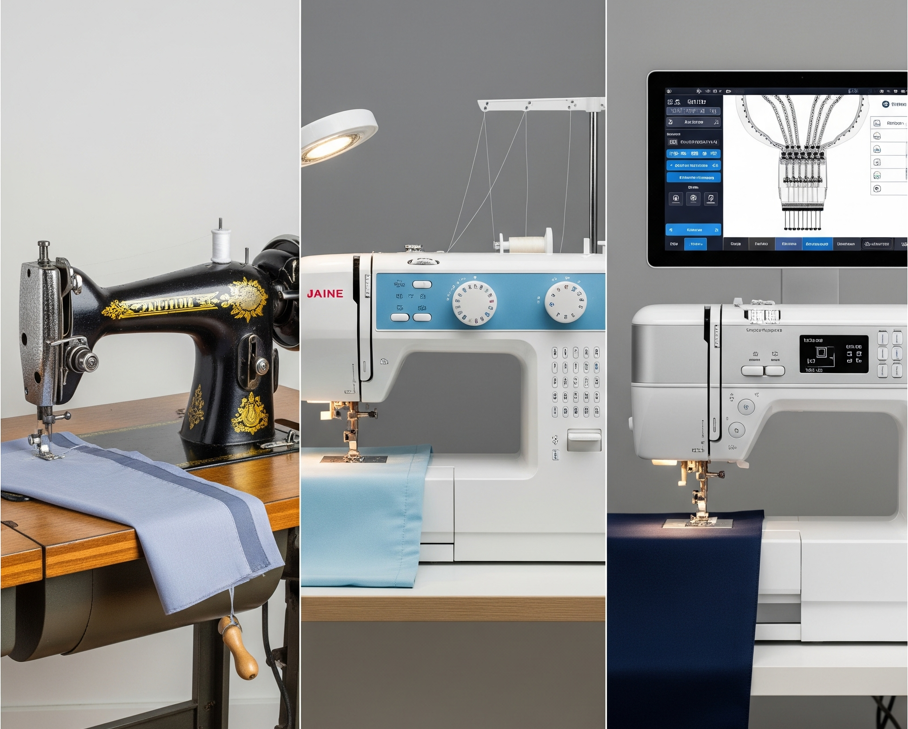
Manual Sewing Machines: Traditional Yet Reliable
Manual machines remain part of the sewing industry due to their durability and simplicity. These machines often feature a hand wheel or foot pedal mechanism, requiring no electricity. Although modern customers lean toward advanced models, manual machines still serve domestic environments where stability and cost-effectiveness matter.
VSsewing Machine provides traditional models from trusted brands. Customers who value long-lasting metal construction appreciate these machines. Since they do not depend on power supply, manual machines often work well in locations with limited electricity. Over time, their reputation has remained consistent because maintenance needs stay minimal.
Electric Sewing Machines: Balancing Convenience and Control
Electric sewing machines combine mechanical parts with motor-driven systems. These models reduce physical effort while offering smoother stitching. With simple controls, they allow users to handle multiple fabrics efficiently. Moreover, electric machines provide consistent results compared to manual versions.
At VSsewing Machine, electric models from Usha, Singer, and Brother are popular among tailoring shops. Since these brands maintain strong service support, buyers feel confident about long-term usage. Electric machines often include extra stitch patterns, thread tension controls, and better speed management. Therefore, they represent a middle ground between manual sturdiness and computerized precision.
How Do I Choose Between Manual, Electric or Computerized Machines?
Computerized Sewing Machines: Precision and Modern Features
Computerized sewing machines highlight the most advanced features available today. These models integrate digital displays, automatic needle threading, and programmable stitch patterns. Customers choosing such machines often focus on efficiency, time savings, and decorative stitching.
VSsewing Machine showcases computerized options from global brands such as Juki and Brother. Since the showroom provides warranty and post-selling support, buyers can depend on professional servicing when required. The presence of complaint-handling policies further strengthens customer trust. Additionally, computerized machines are designed for both domestic creativity and industrial production.
Differences in Functionality
The differences between manual, electric, and computerized machines are not limited to design. Functionality also varies significantly. Manual machines require continuous effort, while electric ones simplify operation with a motor. Computerized versions, on the other hand, transform sewing into a more automated process. Transitioning from one category to another reflects a shift in technology and efficiency.
VSsewing Machine highlights these differences during pre-selling demonstrations. Customers can see how stitch patterns vary, how noise levels differ, and how each machine adapts to heavy or light fabrics. This approach helps them understand real-world performance rather than only technical specifications.
Role of Warranty and Service
When comparing machine types, warranty and service guarantees add another dimension. At VSsewing Machine, warranty coverage spans across manual, electric, and computerized models. The after-sales service includes installation support, maintenance checks, and repair handling. Since the company manages a dedicated service center in Chennai, customers experience fewer delays.
For computerized machines, software-related repairs sometimes require expert handling. In such cases, VSsewing Machine coordinates with brand service teams. This structured model ensures that customers receive prompt solutions without unnecessary confusion.
Performance in Industrial and Domestic Use
The type of machine chosen often depends on whether it is used in domestic or industrial settings. Manual machines, though durable, suit lighter workloads. Electric machines balance speed with flexibility, making them common in tailoring shops. Computerized machines excel in industrial production lines where high-volume, decorative, or embroidery stitching is required.
VSsewing Machine offers machines across all these categories. As a result, the showroom attracts both individual customers and business owners. Since brand partnerships include Juki, Jack, and Gemsy, industrial customers also find specialized machines with stronger components.
Customer Experience and Accessibility
Customer experience extends beyond machine performance. Buyers also evaluate accessibility to service, spare parts, and complaint handling. VSsewing Machine ensures accessibility by providing showroom support, phone contact, and a structured complaint section. This system benefits customers using both basic manual machines and advanced computerized ones.
Furthermore, refund policies remain transparent. If customers face early-stage product issues, policies guide the redressal process. These measures create confidence regardless of the machine type selected.
Evolution of Sewing Machines
Understanding how to choose between machine types also involves appreciating the evolution of sewing machines. Manual models introduced basic functionality decades ago. Electric machines reduced human effort and expanded stitch patterns. Computerized models now bring digital control and memory functions. This timeline shows how the industry has grown while maintaining core stitching quality.
VSsewing Machine’s collection reflects this progression. Their showroom represents the shift from traditional to modern without abandoning reliability. Customers visiting their store often witness side-by-side comparisons, making the differences clear.
Factors Highlighted in Showrooms
Showrooms like VSsewing Machine highlight more than just technical details. Demonstrations focus on comfort, fabric adaptability, and operational speed. With brand diversity under one roof, customers recognize how machine types align with real usage. Furthermore, pre-selling consultations explain which environments favor which category. Even though each type carries advantages, the consistent presence of warranty and service makes the decision less risky.
Conclusion
The question “How do I choose between manual, electric or computerized machines?” opens up a broad discussion about technology, reliability, and service. Manual machines represent tradition, electric ones balance effort and efficiency, while computerized versions offer advanced precision. At VSsewing Machine, customers encounter all these categories along with warranty, service guarantees, and transparent support policies. With brand partnerships that include Usha, Singer, Brother, Juki, Jack, and Gemsy, the showroom provides comprehensive coverage of sewing machine options. Ultimately, the distinction lies in how each type functions and how companies like VSsewing Machine ensure dependable service throughout the machine’s life.

